

Why is Zack Polanski the only politician making sense of the Manchester Synagogue attack?

This week on Yom Kippur, the holiest day in the Jewish calendar, worshippers were attacked outside a synagogue in Manchester. Before the bodies were cold, and before the facts were clear, right-wingers were already twisting the attack to their own ends.
Columnist Stephen Pollard suggested that pro-Palestinian journalist Owen Jones incited the attack.
The Daily Mail’s political editor, Jason Groves, insinuated that Zarah Sultana’s call to expel Israel’s ambassador had led to the attack.
Columnist Dan Hodges works for Groves at the Mail. He faced no consequences when, earlier this year, he advocated war crimes against Palestinian children. He saw the attack as a chance to push for a total ban on pro-Palestinian marches and a “legal reckoning” for Owen Jones.
Israel claimed that the UK Government’s recognition of Palestine had led to the attack, and used it as an excuse to formally invite far-right activist Tommy Robinson to visit the state.
British politics now works as a posting-to-policy pipeline. Online writing becomes government edict. The right-wing press conjured a link between opposing the killing of civilians in Gaza and murders at a synagogue in Manchester. Just hours later, government ministers adopted their rhetoric.
British Home Secretary Shabana Mahmood called pro-Palestinian protests “fundamentally un-British.” She urged them to stop after the attack. Now she’s using the attack as an excuse to further restrict protest. There’s a lot wrong with Mahmood’s framing of this issue, so let’s unpack it.
Labour figures often minimise the genocide in Gaza as a Muslim-only issue. This plays into latent suspicions that Muslims in Western countries are more loyal to the Middle East than to their own constituency. Mahmood leans into this smear by equating being pro-Palestinian with being un-British.
You’d hope she’d know better, given she’s a Muslim herself. Maybe she does? Regardless, she’s the latest in a long line of black and brown ministers appointed to launder racist policies. You might think that’s a bold claim that downplays Mahmood’s achievements. But it’s not me saying it, Labour Party figures admitted it when they appointed her.
She is the perfect choice for Home Secretary. She’s as hard as nails on immigration. But she’s a Muslim woman. The Left won’t know how to attack her.
For thousands of years, people have also accused Jews of “dual loyalty.” Mahmood insists that protests against Britain arming a genocide will upset British Jews, reinforcing this trope. Many British Jews take part in these marches, but those aren’t the Jews that Mahmood cares about. Her insidious framing conflates British Jews with Israel, then pits Jewish safety against Palestinian liberation and the British right to protest. There’s a British term for this kind of behaviour: shit-stirring.
Condemning murders at a synagogue and opposing the killing of civilians in Gaza can go together. They are not mutually exclusive. I have enough pro-Palestinian, anti-Zionist Jewish friends and family to know this, but that’s not the case for a lot of people. Jews make up a fraction of a percentage of Britain’s population. Many Britons don’t know a Jew, and that’s why Mahmood’s rhetoric is so dangerous.
Given how politically live this issue is we don’t have nearly enough polling on it. But the polls we do have disprove Mahmood’s worldview. They indicate that Western Jews oppose Israel’s supremacist project. Furthermore, if you read hate crime reports, it becomes clear very quickly that pretending that all Jews back the Israeli Government puts all Jews at greater risk.
Predictably, London’s institutionally racist Metropolitan Police force agreed with Mahmood. Pro-Palestine Action protesters were asked to delay their planned actions. The request cited concerns about “significant pressure on policing” during a time of “significant fear and concern in communities.” It’s a sleight of hand that blames pro-Palestine activists for the police-work incurred by their own criminalisation. A tacit admission that the politically-motivated crackdown on grannies holding signs is a waste of resources.
Palestine Action are, according to the British government, a terrorist organisation. I previously warned that:
By redefining protest as terrorism, the government has diverted police from real counter-terrorism work. It’s absurd and it will mean more preventable attacks occurring unimpeded.
What a depressing thing to have written less than a month ago. This week’s attack, along with the farcical sight of cops politely asking “terrorists” to be responsible and not do “terrorism” because they’re very busy, underlines my point.
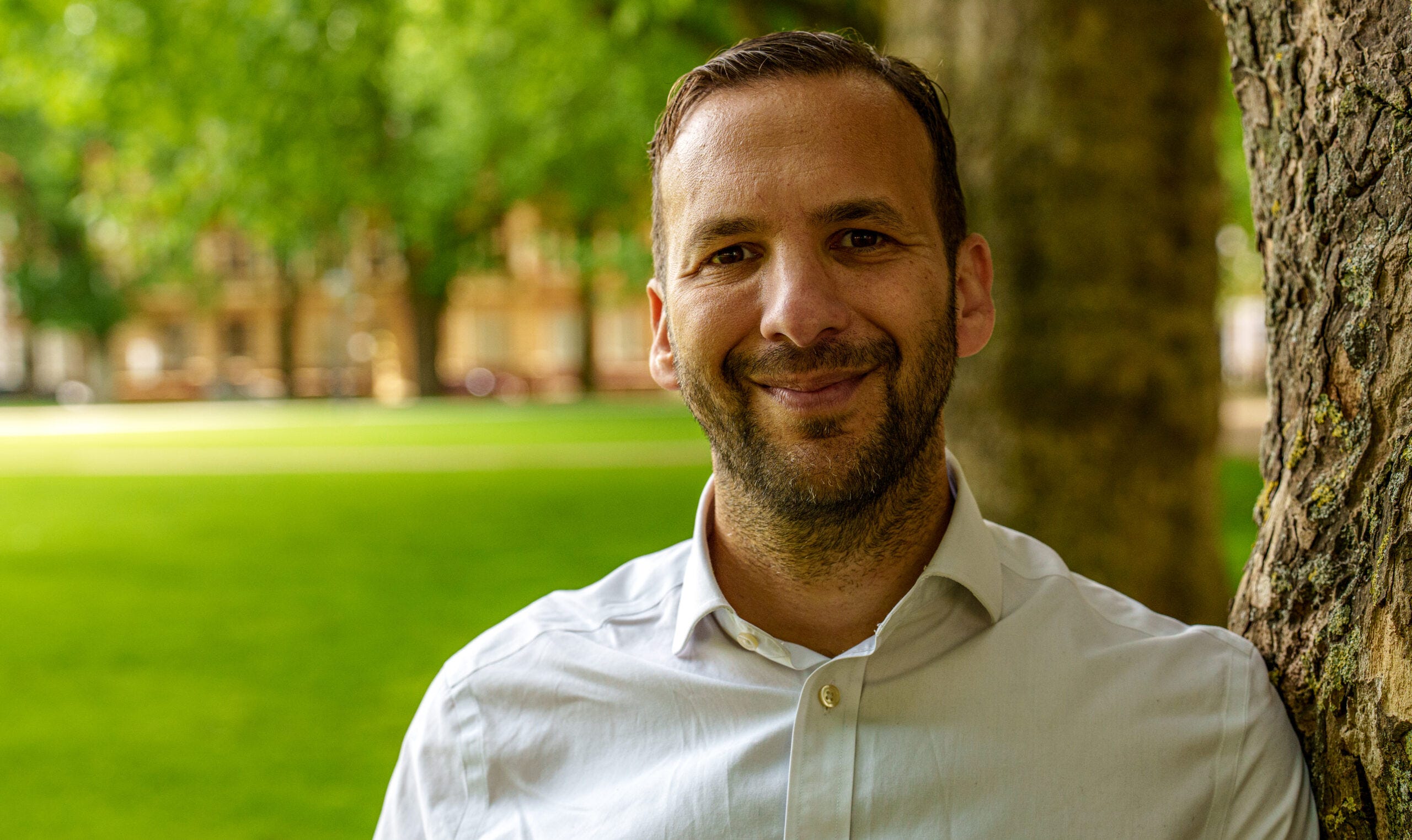
Thankfully, not all British politicians are as cynical and divisive as Shabana Mahmood. Jeremy Corbyn and Zarah Sultana have made strong statements. But, Zack Polanski, the Green Party leader, has impressed me the most. His statesmanlike response to Mahmood’s comments is worth quoting at length:
I’m a Jewish man who grew up, very close to this synagogue. So this is both personal for me, and political.
Shabana Mahmood is being deeply irresponsible. There’s a lot of it about. Conflating protests against a genocide in Gaza with an antisemitic terrorist attack, is deeply irresponsible. And actually, putting those two things together, I say personally as a Jewish person, makes me feel more at risk.I‘m really proud of interfaith work where I’ve come together with the Muslim community to say, actually, an attack on one of us is an attack on all of us. The only authentic response is solidarity. We need community cohesion and we need people to stick together.
What a breath of fresh air. A capable leader with a distinct political, personal and religious identity. He’s wielding that identity to stick up for everybody, from all walks of life. Polanski proposes that we form broad interfaith and intercommunal coalitions to overcome bigotry. This approach is known as safety through solidarity. If you want to know more about how it works, I’ve written about it before.
So, what allows Polanski to show such nuance and empathy in a political climate that abhors these traits? First: he’s very good at his job. A skilled communicator who is deeply involved in anti-racist communities. He’s doing the work.
He also lacks the instinct that has pushed the Parliamentary Labour Party away from their traditional base. He doesn’t prioritise the “special relationship” between the UK and the U.S. at all costs. He draws the line at genocide.
The Labour Party’s instinct has driven it to support a U.S.-backed genocide and stay silent on the topic of America’s lurch towards fascism. Their discomfort with their position is why they use Judaism as a shield from criticism. This puts Jews in danger. Polanski isn’t weighed down by any of this. He’s ready to embrace the new multipolar world, while the Labour Party clings to the dying old one.
Lastly, he’s Jewish. This shields him from the typical right-wing strategy of branding anyone who supports Palestinians as antisemitic. This doesn’t mean they’re not trying, just that it’s not sticking.
Attentive Possibility Space readers will have noticed that I pulled this trick earlier in this article: I invoked my Jewish family as a shield. It’s a shameful and cowardly thing to do. We need to dismantle the profoundly racist political and media culture that makes it a strategic thing to do. On this topic, Mohammed el-Kurd has me dead to rights:
I am interested in interrogating the drive toward this politics of appeal. The premise that Jews, Israelis, and Westerners are less biased or more truthful is entirely unfounded, for it presumes they have no skin in the game … This persuasive technique is fallacious because it does not appeal to their authority as human rights organizations, but to their authority as Jewish (or European or American) institutions, first and foremost.
If such specious reasoning is “strategic,” what does that reveal about our world?
Mohammed el-Kurd is right. And Zack Polanski is right. And, strategically, I’m giving Polanski the last word:
We need unity, we need complicated conversations and we need to bring people together rather than divide.
Very good article. I heard Zack on Radio Five on Friday afternoon (1 hour 38mins in) talking about this. I thought he was fantastic. Just everything that is not normally said but is absolutely spot on. Give it a listen