

Playing with the exterminationist impulse in Cronos: The New Dawn

An old man, wrists bound, crushed into a thick pulp by tank tracks. A girl hung on a wall like a coat on a hook, legs turned to ribbons. A boy with a hollow skull. I’ve been watching this genocide for a few years now and I keep wondering: what could bring a society to treat people like this?
I sought answers in the dehumanising statements of decision makers and their voters. I watched films and read histories of genocides all over the world. Intellectually I was beginning to understand but emotionally, the exterminationist impulse was still an enigma. Then, unexpectedly, I played a videogame and I felt it.
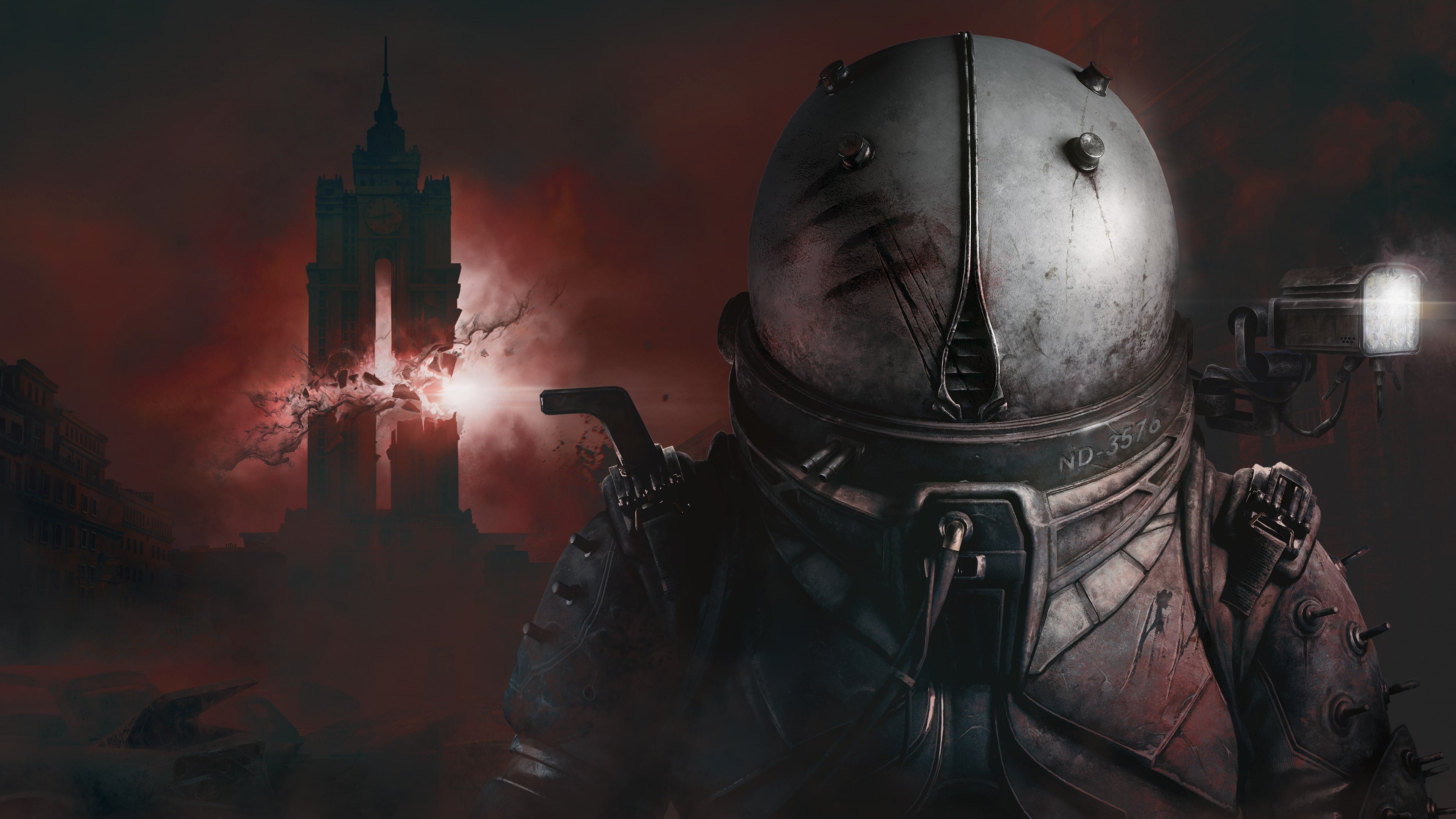
Cronos: The New Dawn is a survival horror game set in the post-apocalyptic remains of Kraków, Poland. You play an unnamed traveller, sent to this world of fog and ruin to learn about the outbreak that ended it. The game’s narrative is a time travel puzzle inspired by 12 Monkeys and Netflix’s Dark. Piecing it together is one of the game’s highest satisfactions. We won’t spoil it here.
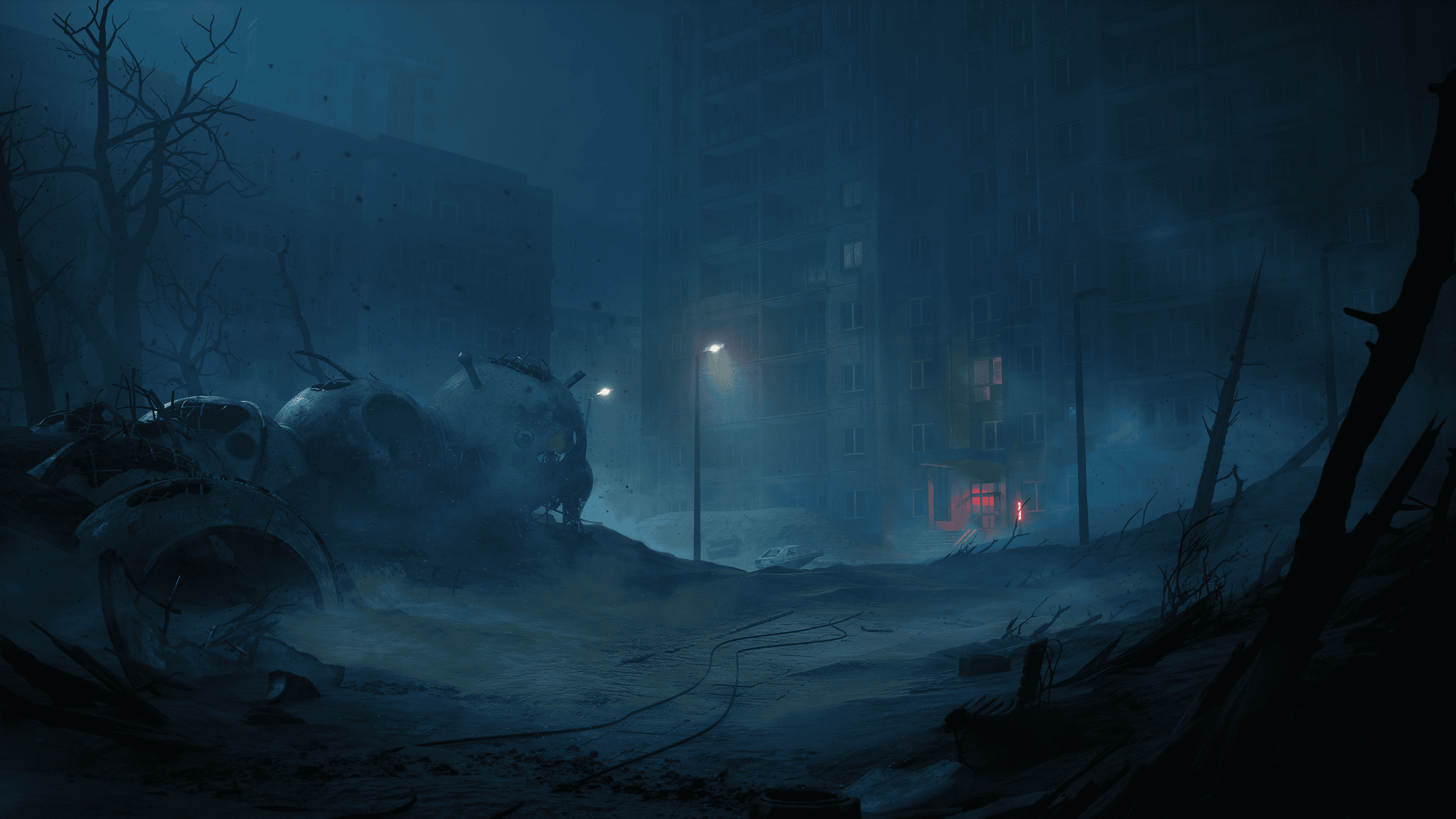
What we’re interested in isn’t the game’s narrative, but its ludonarrative. That is, the story that emerges from the moment-to-moment gameplay. In short: Cronos intentionally induces the player to behave like a génocidaire.
Like most horror games, it alternates between highly stressful sequences and periods of relative calm. What distinguishes it is what it asks you to do while you decompress: burn the bodies. The game tells you to do this because monsters can merge with corpses, creating a hardened version of the same enemy.
That doesn’t turn out to be much of a threat though. The post-game stats screen showed that I allowed only 12 enemies to merge with fallen foes. That’s a tiny number of the disfigured demons I defeated during my playthrough, and I’m not even a particularly good shot.
I realised quite early on that I didn’t actually need to be doing this, but I still burned every last one. The game only lets you carry one unit of torch ammunition at a time, so the process is quite monotonous, requiring a lot of backtracking. Some critics felt this was bad game design, but that wasn’t my experience. Forcing me to stew in discomfort was the point.
Running these refuelling laps gave me time to come to a disturbing realisation. I wasn’t burning bodies for any discernible gameplay advantage, and I wasn’t having fun per se. I was indulging a compulsion to cleanse. Watching the flames from the safety of my fireproof armour I felt distant, decontaminated and dominant. Burning the bodies didn’t actually make me safer, but it made me feel more secure.
My brain had linked fire to safety, and the game reinforced this connection by ensuring the refuelling stations were softly lit, domestic settings. Some even had painstakingly animated cats for me to pet. Like it had for génocidaires throughout history, purifying flame came to symbolise my mission.
Burn. Demolish. Kill.
Mehmed Talât Pasha, architect of the Armenian genocide, 1915
Entrust to the flames the intellectual garbage of the past. It is a strong, great and symbolic undertaking.
Joseph Goebbels, chief propagandist for the Nazi Party, 1933
We don’t have a policy of scorched earth — we have a policy of scorched communists.
General Efrain Rios Montt, Guatemalan military dictator, 1982
A fire storm should wash over Gaza.
Moshe Feiglen, Israeli politician and party leader, 2023
I hate these people. I did not enjoy embodying an approximation of their feelings. But if we hope to learn, deradicalize, and prevent, then understanding them viscerally, not just intellectually, is useful.
Cronos contains another tool that elicits the exterminationist impulse: the integrity scanner. Mounted on the barrel of your weapon, this gadget lights up when pointed at any living being. It’s the game training you to distrust the human form. Which is helpful, because the outbreak that ended the world has also splattered amalgamated human flesh all over the walls.
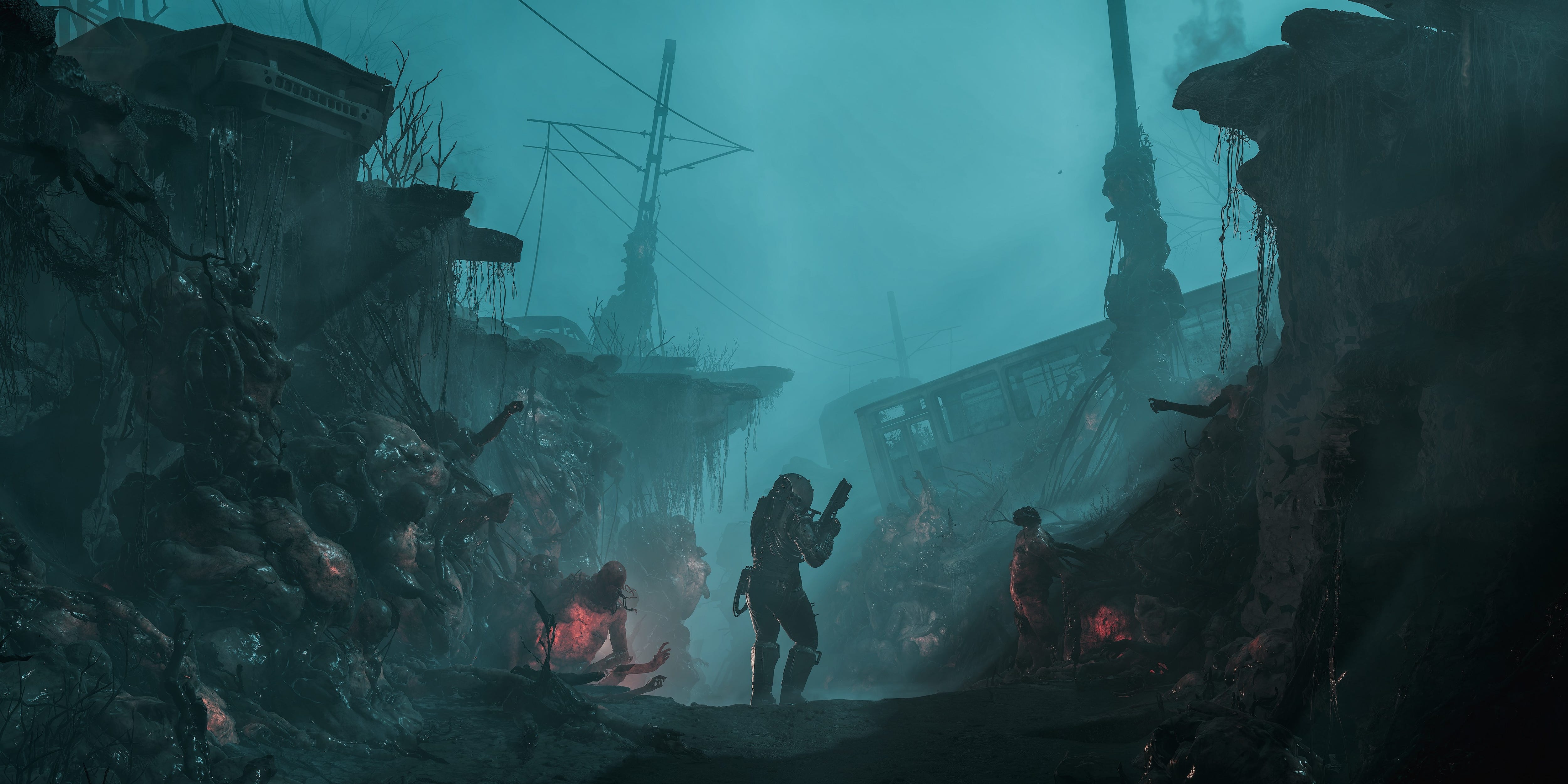
I spent an inordinate amount of time combing my crosshair over this tapestry of human flesh, waiting for the green light to open fire. I scanned what I thought was a protruding spine only to realise it was actually a freakishly long series of interlocked fingers. I was twice disgusted. First at the unexpected and uncanny array of anatomy. Second, that these people just held hands, presumably sung Kumbaya, then promptly died. Many didn’t even try to fight it.
My armoured suit cuts a striking silhouette. It sets me apart from these emaciated victims. The more I played, the more convinced of my supremacy I became. Game designers call this a power fantasy. Génocidaires throughout history have laboured under similar delusions. Nazi Germany’s übermensch, fascist Italy’s new man, the political soldier of Britain’s National Front, the rugged individual of the American frontier and Israel’s vision of muscular Judaism.
Max Nordau, one of Zionism’s founding fathers, argued that living outside of Israel had fashioned Jews into “crippled,” “timid” figures with “counterfeit” selves who were “hateful to all men of high standards”. He called them degenerates and sought to regenerate them in the image of Spartans. His vision of muscular Judaism, suffused with visceral contempt for the diaspora Jewish mind, spirit, and even physiognomy, continues to inform Zionist thought.
Toughness, aggressiveness, and battle-readiness characterise Israeli identity. Never again, Israelis are told, will Jews go like lamb to slaughter. Never again can they let down their guard. Israel seeks to supplant the stereotype of the meek, Yiddish-speaking Jew of the Eastern-European shtetl with the Hebrew-speaking Sabra Jew who is always prepared to fend off would-be attackers. To secure and extend the perimeters of his land.
Nordau’s fantasy struck a chord with a victimised and decimated people despite, or perhaps because of, its internalised antisemitism. It led Zionists to follow in the footsteps of their ethnonationalist persecutors. In Cronos, as in Israel, exterminationist violence is coaxed out of you by systems intended to make you feel unsafe.
I would have voted for Mamdani [because] I want everyone to make aliyah. I’m a long-time consistent supporter of antisemitism [because] I’m in favor of all the Jews coming here.
Ben Caspit, Israeli journalist, 2025
The difference is that Cronos provokes this impulse in order to teach you, at the very end(s), not to succumb to it.
At every level of its design Cronos uses the conventions and structure of the survival horror genre to evoke dread and elicit an exterminationist response. The game’s resource economy, for example, is stingy and cruel. The margin between defending yourself and running out of ammunition and becoming defenceless is razor-thin. You’re heavily armoured, but not nearly armoured enough. This produces a permanent sense of precarity that incentivises the player to smash, kill and loot. It ends up driving frantic, stop-gap ammunition purchases rather than the smarter choice: investing in lasting upgrades. There’s a lesson in this for austerity-minded politicians.
The game’s themes and systems align so perfectly that an instant of insecurity is inserted between each gunshot. Your gun needs charging. This leaves you standing in place, helplessly watching monsters lumber closer and closer, until the charge finally rips loose. Everywhere you look it’s tension and release: phobia met with force. All you see is monsters, and all you need is kill.
The developers of Cronos know exactly what they’re doing. This is not some corpse defiling simulator, it’s an accomplished gothic humanist tale with a lot to say. I saw it through the lens of an ongoing genocide. But it’s equally about Soviet totalitarianism, pandemic induced misanthropy, closeness at the cost of pain, and about what happens when ideology fails.
Successfully executing on all of its themes, both narratively and mechanically, it does something that few games manage. It grants the player the opportunity to hold their own actions in some degree of contempt, and to learn from them. It’s one of the most accomplished survival horror games ever made and the best game of 2025.
Acknowledgements
This article owes a debt to:
Noah Caldwell-Gervais excellent video essay Misery Loop: A Critique of Cronos: The New Dawn. My article only addresses ludonarrative. Gervais takes on the game’s time-traveling narrative as well.
This conversation about Zionist fear-mongering between Matt Bernstein, Matt Lieb and Simone Zimmerman.
Eli Valley’s Museum of Degenerates: Portraits of the American Grotesque. This book, like Cronos, follows Nordau’s vision to its logical conclusion as an act of critique.
Matt Weddig, whose feedback massively improved the clarity of this piece.